
Land Port

Scope
Architecture, Landscape, interior
Program
CIVIC + TRANSPORTATION
Category
Infrastructure / Land Port of Entry
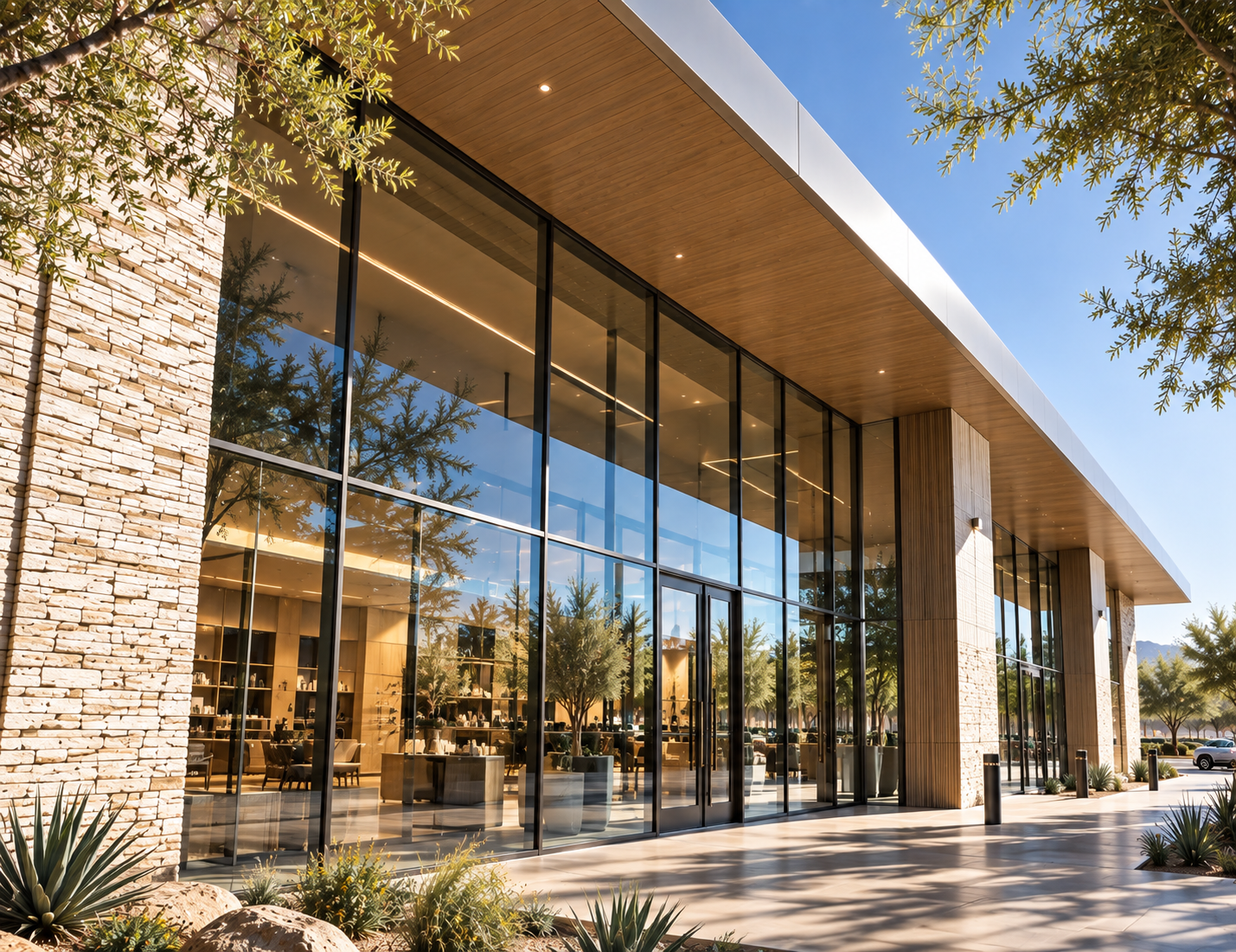
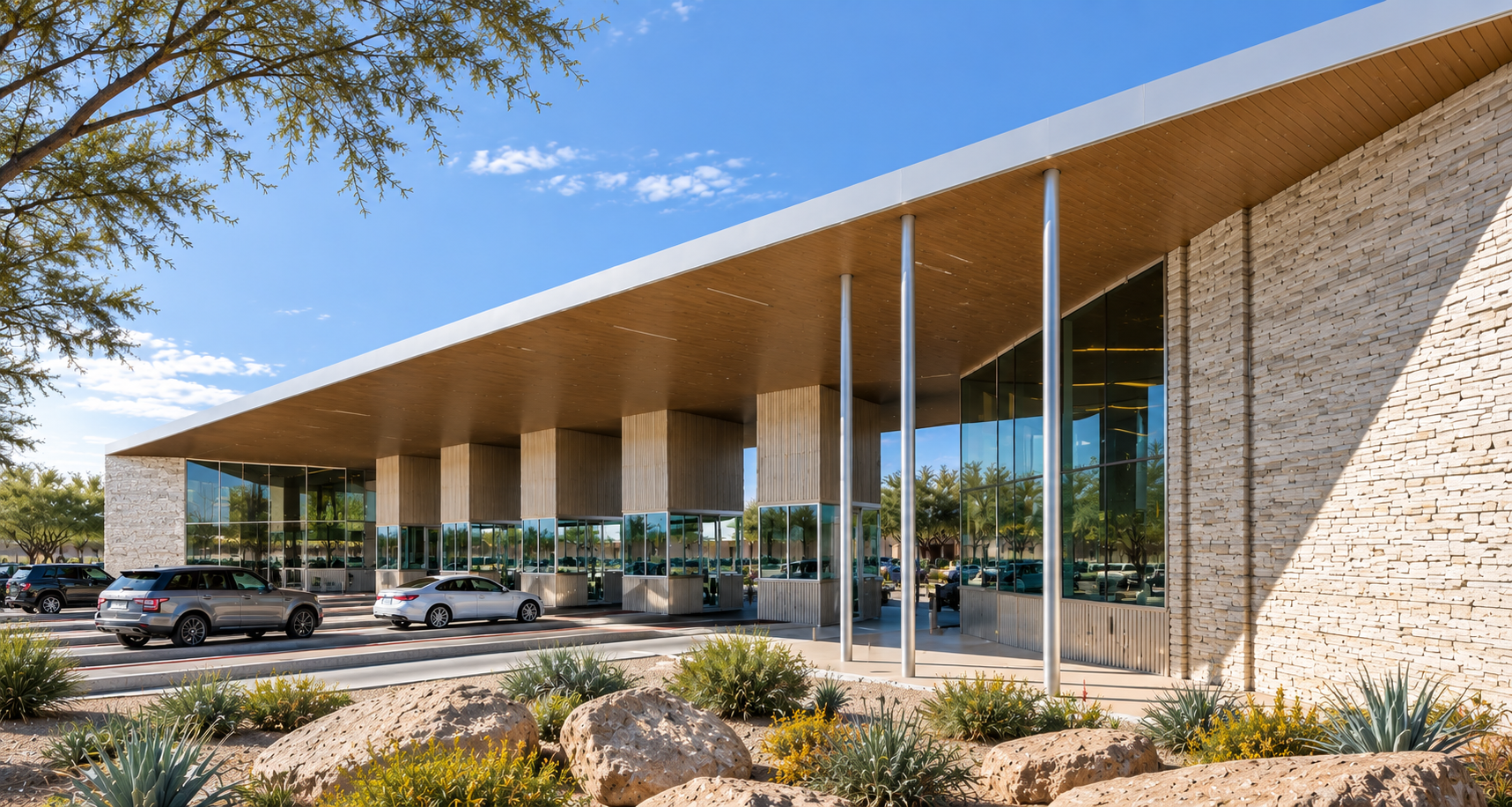
A sweeping roof plane, textured stone walls, and a rhythmic sequence of wood-clad checkpoints give the port of entry a clear civic presence, transforming a highly functional threshold into a composed architectural gateway.
The design organizes the arrival experience beneath a broad, continuous canopy that unifies multiple vehicular checkpoints within a single architectural gesture. Slender metal columns preserve a sense of openness, while wood-lined soffits and vertically detailed checkpoint enclosures introduce warmth and rhythm across the long elevation. Textured stone walls anchor the composition at either end, giving the structure permanence while framing the movement of vehicles through the site. Conceived as a new Land Port of Entry, the architecture translates the technical demands of border infrastructure into a clear and welcoming gateway, balancing the requirements of security, inspection, and movement with a strong civic presence.
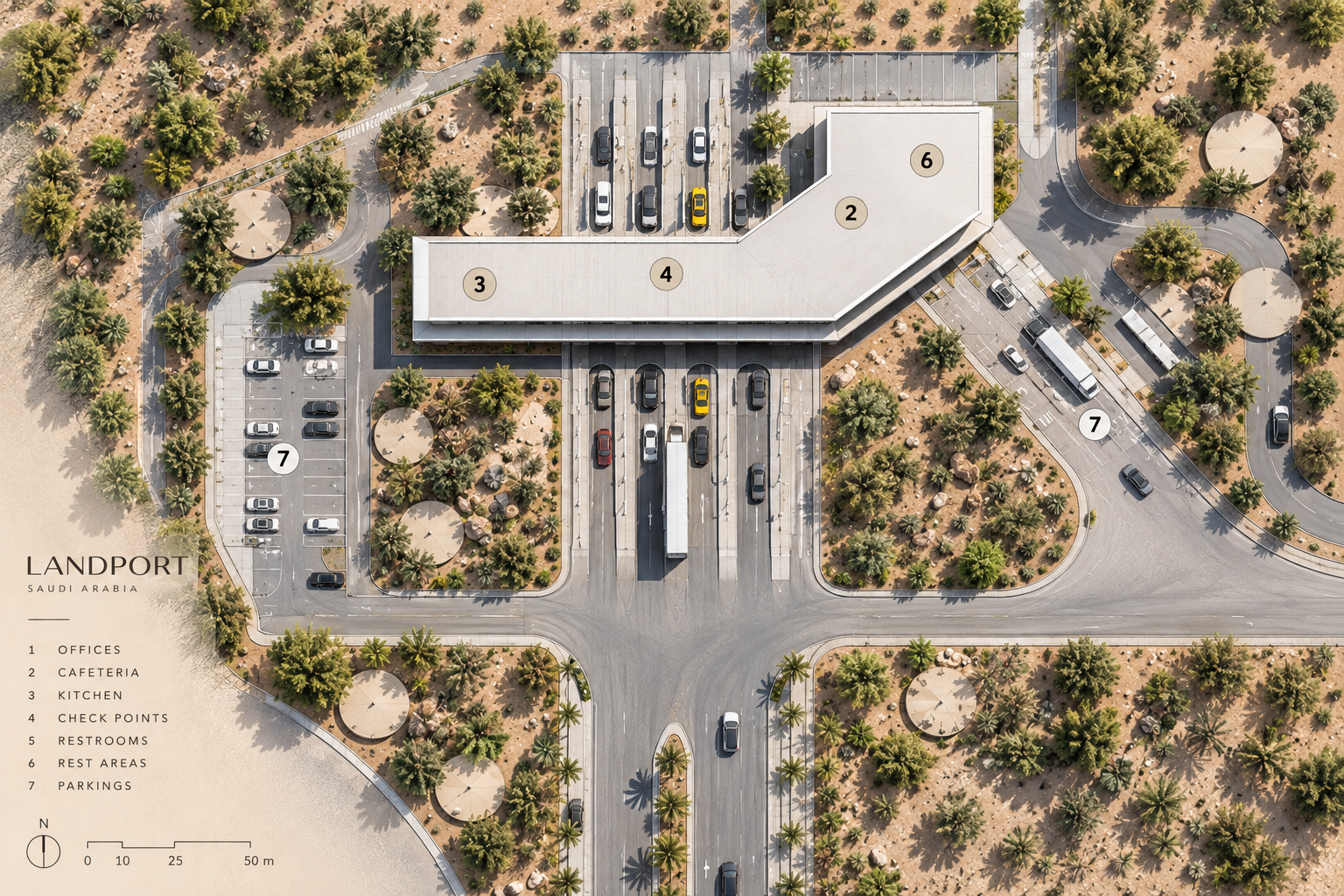
The project grew from a conceptual study of traffic patterns and operational requirements associated with a United States Land Port of Entry. Vehicular and pedestrian flow studies considered non-commercial, commercial, and outbound traffic, while master planning and analysis tested multiple design approaches against U.S. Land Port of Entry design rules, policies, and Customs and Border Protection requirements. That process established the basis for schematic design and coordination with consultants through construction administration using a Design-Build delivery model. Offices, checkpoints, support spaces, rest areas, and parking are brought together within a plan shaped as much by efficiency and oversight as by architectural clarity.
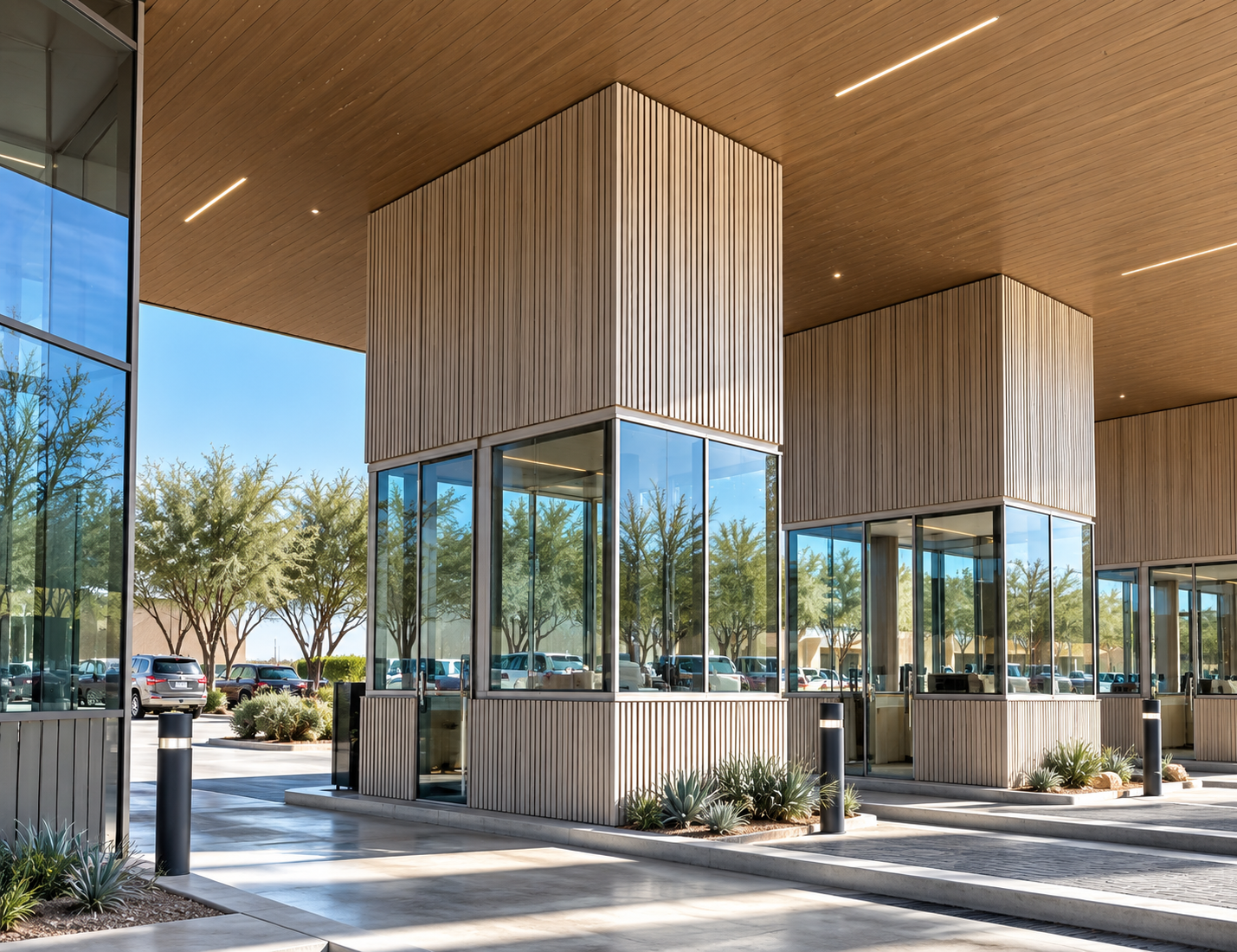
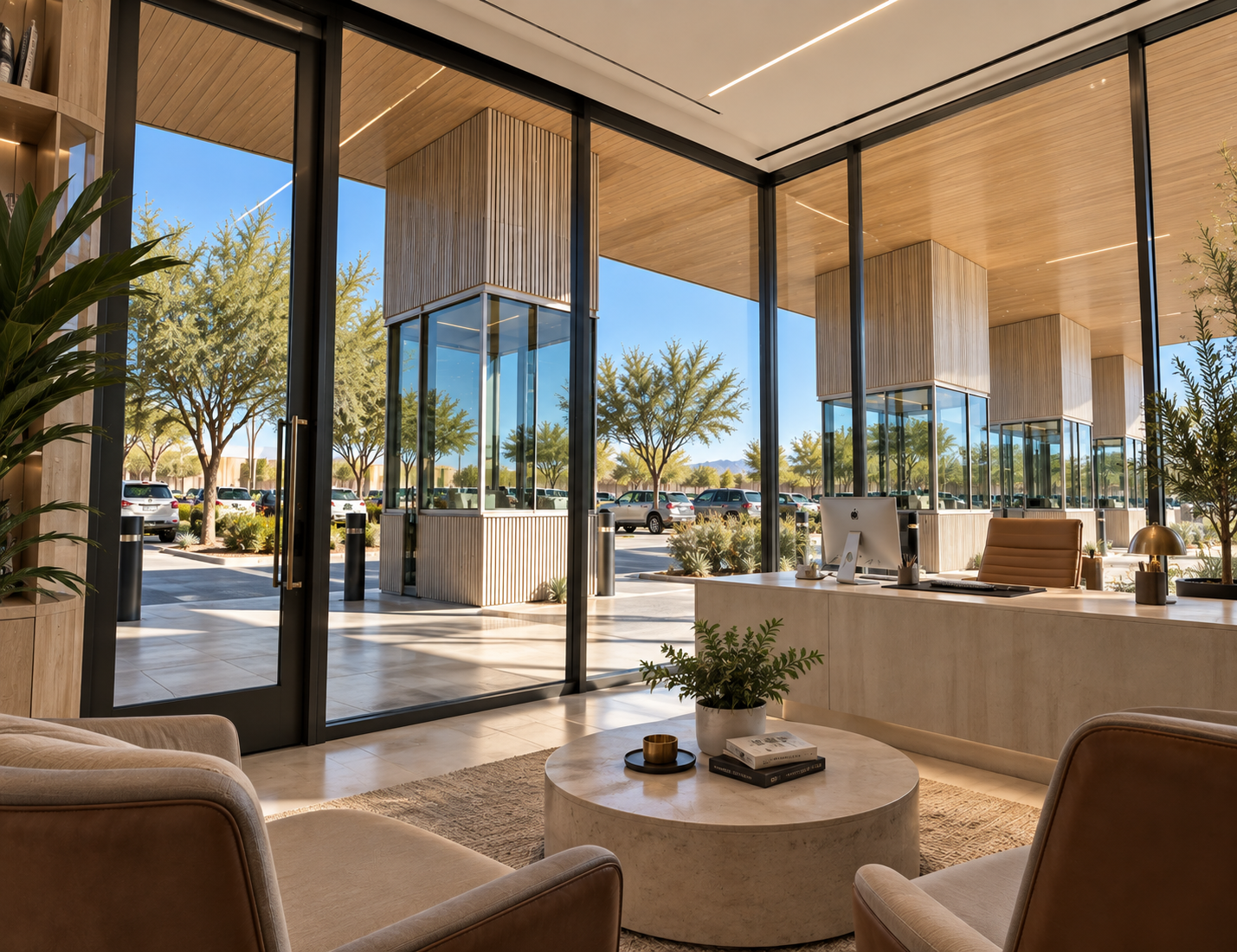

The Land Port is envisioned as a civic gateway—a place where infrastructure, architecture, and public service come together to create a dignified sense of arrival. A unifying canopy brings movement, security, and hospitality under one clear architectural identity, transforming a point of passage into a meaningful public threshold.